
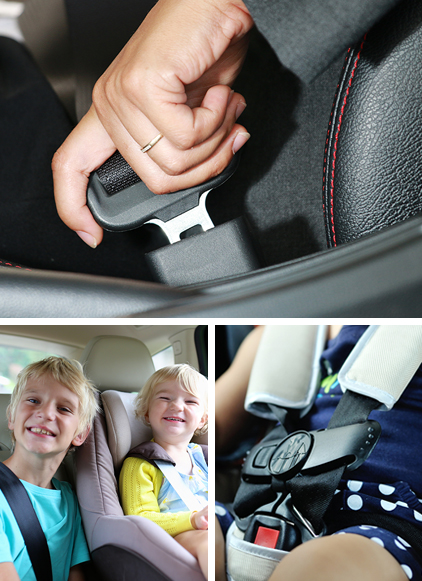
Lack of restraint use is a significant contributing factor in crash fatalities and serious injuries across the country. In recent years, Rhode Island has made great strides towards seat belt safety throughout the state. Fatalities resulting from crashes where restraints were not used accounted for approximately 22.2% percent of the total fatalities in 2025 which is down from the usual trend of around 50% unbelted each year. Rhode Island also achieved its highest ever recorded statewide belt usage rate of 93% in 2025, above the national average of 91.3%. The increase in safety belt usage across the state appears to be associated with the continued decline of unrestrained fatalities.
The Office on Highway Safety (OHS) continues to staff a Program Coordinator focusing their efforts on Occupant Protection. This has enabled OHS to enhance occupant protection programs and outreach. Programming includes continued support of child passenger safety technician (CPST) training geared toward first responders, educators and caregivers interested throughout the state. This training program is based out of Rhode Island Hospital's Injury Prevention Center, and they have been a Child Passenger Safety partner with the OHS for well over two decades.
Rhode Island's recent Triennial Plan shows that 28% of unrestrained fatalities occurred on an interstate, freeway, or expressway, 34% of unrestrained fatalities occurred on an urban principal arterial, and about 15% occurred on a collector or local road. Statewide, Vehicle Miles Traveled (VMT) on local roads is estimated to make up 7% of statewide VMT, suggesting that crashes on local roads are overrepresented. Between 2018 and 2024 the five-year rolling average number of annual unrestrained fatalities has remained steady at between 17 and 18 fatalities per year. 2025 was an uncharacteristically low year with only 4 unrestrained occupant fatalities. The drop in 2025 unrestrained fatalities coincides with the highest recorded observed belt use in 2025 of 93.0 percent. Notably, unrestrained fatalities made up only about 11% of fatalities in 2025 compared to around 25 percent of fatalities in prior years. Additional occupant protection data breakdowns can be found in the OHS Triennial Plan.
Rhode Island has had a primary seat belt law (R.I.G.L. § 31-22-22) that also incorporates child restraints and child passenger safety since 2011. A complete description of this Rhode Island General law can be found in the following link at Seat Belt Laws & Car Seat Recommendations. OHS currently supports or offers grant funding to the following programs that focus on seat belt safety and child passenger safety: